"Purifier" gadgets cover a wider range of technology than the name suggests: electrolyzed water for produce, static gels for airborne dust, filters for actual air. Two of them, in particular, share the same pattern once you look past the headline claim: a real, independently documented mechanism, attached to a flat percentage figure that oversells what that mechanism actually does under real conditions.
A real, published mechanism doesn't mean a flat percentage
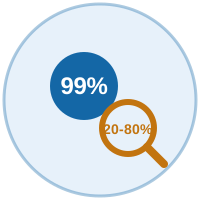
Electrolyzed water for produce washing isn't a marketing invention. It's a real process with peer-reviewed research behind it, and that research shows genuine pesticide reduction. The catch is that the effect varies enormously by pesticide type: some water-soluble pesticides like malathion and fenitrothion showed up to 80-100% reduction in lab studies, while a lipophilic pesticide like DDT showed only 20-40% reduction under similar conditions. A single "removes up to 99% of pesticides" claim, the one on PuriBreeze's packaging, flattens that range into one reassuring number. We also found research noting that the breakdown products created when certain pesticides are electrolyzed can, depending on the compound, be more toxic than the original molecule, a nuance no produce-washer marketing page is likely to mention.
Localized effects marketed as whole-room claims
PuriCell's mineral gel is a different technology with a similar pattern. Independent user reports describe a real, plausible localized effect: visible darkening of the gel over a few weeks and less frequent dusting needed near the unit. That's consistent with what a sticky, absorptive gel can actually do to dust settling close to it. What isn't consistent is the "traps 99.99% of dust" claim on the box: a static gel with no fan or airflow mechanism has no realistic way to affect dust circulating through an entire room, only what drifts or settles in its immediate vicinity. The gap between "real, modest, local effect" and "99.99% of a room" is the same shape as PuriBreeze's gap between "real reduction for some pesticides" and "99% of pesticides."
The "expert" and "space agency" credibility signals
Both products lean on a credibility shortcut alongside the inflated number. PuriCell's page quotes an "immunologist" whose credentials we couldn't independently verify, and frames the product as "NASA-inspired," marketing language rather than a documented technology transfer. Neither addition changes what the underlying gel can physically do; they're there to make the inflated percentage feel more credible, not to support it with anything checkable.
What to check before you buy
A flat percentage claim on a purifier-category product is worth treating as a starting point for questions, not a verified result: what's the mechanism, does independent research on that mechanism actually support a single flat number across all conditions, and is the "expert" or institutional name attached to the page independently checkable. None of this means the underlying technology is fake, electrolyzed water and absorptive gels both have real, plausible effects. It means the number on the box almost always describes the best case, not the typical one.